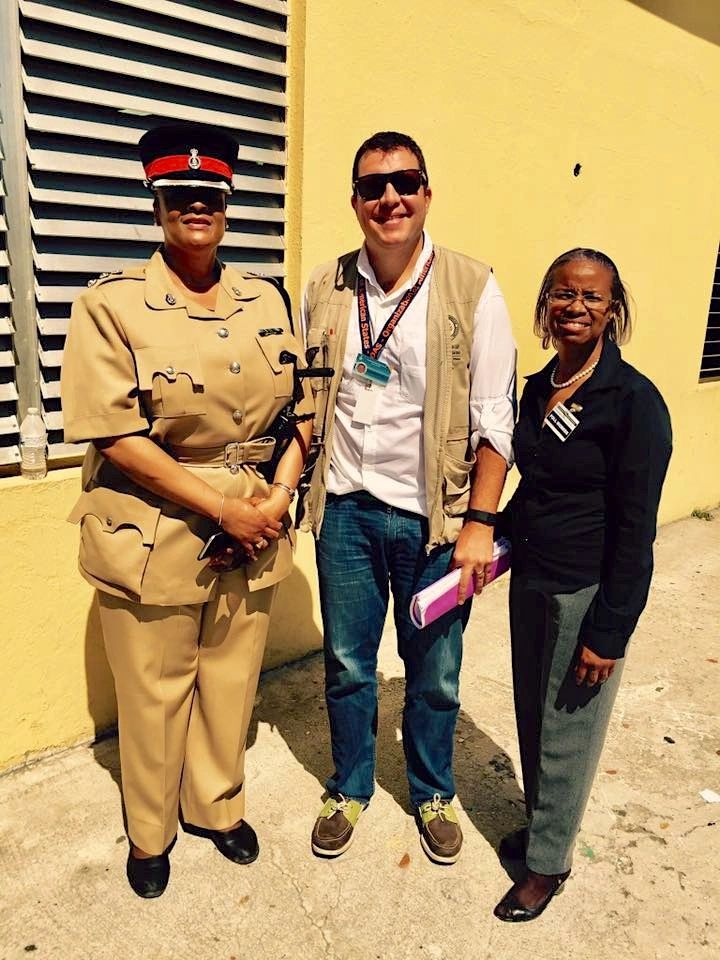
Alejandro Trelles is an Assistant Professor of Politics at Brandeis University and Core Faculty in Latin American, Caribbean, and Latinx Studies Program.
His research examines how electoral institutions shape democratic accountability, with a focus on electoral management, redistricting, and political parties in Latin America and Africa.
Full bio
Alejandro Trelles is an Assistant Professor in the Department of Politics at Brandeis University, where he is also Core Faculty in the Latin American, Caribbean, and Latinx Studies (LACLS) program. His research focuses on the design and performance of electoral institutions, with particular attention to how institutional arrangements shape transparency, accountability, and democratic resilience.
His work lies at the intersection of comparative politics and political methodology, combining formal institutional analysis with empirical research across multiple regions, including Latin America, sub-Saharan Africa, and the Caribbean. He has conducted extensive fieldwork and policy-oriented research in countries such as Mexico, Venezuela, Ghana, and Kenya.
Trelles is the author of Why Elections Need Parties: Managing Free and Fair Elections in Latin America and Africa (Cambridge University Press 2026), which develops a theory of how partisan inclusion within electoral management bodies contributes to the development of de facto autonomy in semi-competitive regimes. His research on redistricting and electoral boundary delimitation — conducted in collaboration with scholars and electoral authorities — has contributed to both academic debates and real-world institutional design.
Before entering academia, he worked for over a decade in Mexico’s federal public administration and served as an advisor to electoral authorities, including the Federal Electoral Institute (IFE). He continues to engage with practitioners and international organizations on issues of electoral governance and reform.
He welcomes inquiries from students, collaborators, and practitioners interested in electoral institutions and democratic governance.
Gallery